Welcome to ChildFun…where Play and Learning go Hand in Hand
...where play and
learning go hand in hand!
Home » Articles » Best Location Tracking Apps for Families: Comparing Features and Differences
Best Location Tracking Apps for Families: Comparing Features and Differences
Most parents don’t realize how much variety exists among location tracking apps until they’re already frustrated with one that doesn’t work the way they expected. Pick the wrong app and you’re dealing with battery drain complaints from your kids, spotty GPS accuracy inside school buildings, or a teenager who resents feeling watched around the clock. After reviewing dozens of options, this guide narrows it down to two standout picks, iSharing and HeyPolo, covering what each one actually does, where it’s strong, and which type of family it fits best.
The research approach for this ranking
Public data drove every decision here. User reviews, feature breakdowns, app store ratings, and official product pages were all pulled and compared. Only apps with a clear, proven track record in the family safety tech space made the cut.
→ See the full research breakdown
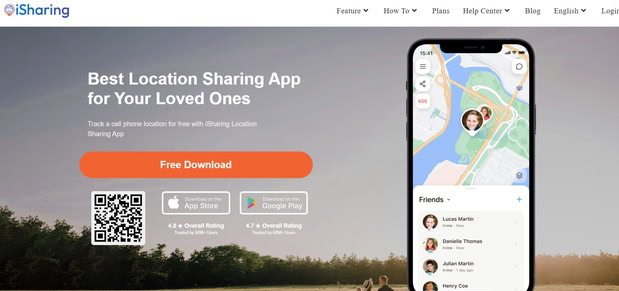
iSharing – Best full-featured tracking for the whole family, with adjustable privacy
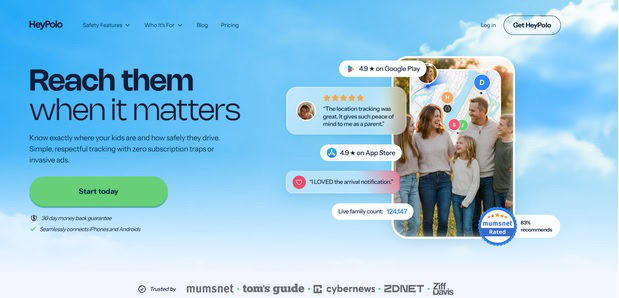
HeyPolo – Newer app backed by cybersecurity company Surfshark
Why Carefully Choosing Location Tracking Apps For Families Matters
Choosing the wrong family location app doesn’t just waste money. It can quietly erode trust between parents and kids, especially teenagers who notice when monitoring feels more like surveillance than safety.
The real challenge isn’t finding an app that tracks location. It’s finding one that stays accurate when a child is inside a school building, doesn’t kill the phone battery before 2 PM, and sends geofence alerts that actually fire when someone arrives or leaves.
Apps built for family safety tend to handle these pressures better because they’re designed around the full picture: balancing child safety with age-appropriate privacy and autonomy, managing location update delays so parents aren’t looking at 10-minute-old data, and keeping battery drain low enough that kids don’t turn location off just to preserve their phone. The right choice shows up clearly in geofence alert accuracy and daily reliability.
Top 2 Location Tracking Apps For Families Breakdown and Comparison
Note: All data in this table is sourced from review platforms and the official websites of the listed companies.
Company Name
Years Operating
Price
Headquartered In
Rating
iSharing
Since 2010
Free tier; Premium plans from Silver to Platinum
Irvine, California, USA
4.8/5 (224,014 reviews)
HeyPolo
Since 2026
From $3.99/month
Mission Viejo, CA
4.7/5 iOS · 4.3/5 Android
iSharing – Best Full-Featured Tracking for the Whole Family, with Adjustable Privacy
What is the main function of iSharing?
iSharing is a real-time GPS location sharing app built for families and close friend groups. It covers the essentials well: live location tracking, geofencing place alerts, location history, and emergency SOS with audio recording, plus inactivity monitoring for elderly relatives and driving reports for teen drivers. What sets it apart is the combination of a genuinely generous free tier, which includes unlimited place alerts and 365-day location history (not cheap to offer, but they do it), with a consent-based privacy model that lets users adjust exactly how precisely their location is shared. With over 66 million downloads since launching in 2010, it has built a track record that’s hard to overlook.
Why Does iSharing Hold Up for Location Tracking Apps For Families?
iSharing solves the affordability gap that stops many families from committing to a paid tracking app, while also addressing the privacy concerns that come with full-family tracking. Giving families full geofencing functionality, coverage for every age group, and adjustable privacy controls, all on a free plan, is the kind of balance that builds long-term user trust.
The Common Threads in Reviews:
Users keep coming back to three things: how accurate the real-time GPS feels, how simple the app is to set up without a technical background, and the flexibility of its privacy settings for managing what different family members can see. There are complaints about ads in the free version and occasional sync delays, but the 4.8/5 rating across more than 224,000 reviews tells you the experience lands well for most families.
HeyPolo – Backed by Cybersecurity Company Surfshark
What is the main function of HeyPolo?
HeyPolo is a location sharing app launched in 2026 by the team behind Surfshark VPN, which gives it credibility in the data protection and encryption space. Rather than defaulting to always-on tracking, the app lets family members set specific time windows for location visibility, so sharing is intentional rather than indefinite. It covers real-time tracking, geofencing, SOS alerts, and teen driver speed monitoring, all while keeping location data encrypted and never selling it to third parties.
Why Does HeyPolo Work for Location-Tracking Apps for Families?
HeyPolo’s time-limited sharing model tackles teen resistance to feeling constantly monitored, and it benefits directly from Surfshark’s cybersecurity background on the encryption and data-handling side. As a 2026 launch, though, it’s still early: the app hasn’t yet accumulated the years of real-world use or the review volume that would let families weigh its long-term reliability the way they can with more established options.
The Common Threads in Reviews:
Users consistently point to how the consent-based model actually changes the tone in the household, and to the encryption and no-data-selling policy inherited from Surfshark. Teens and parents seem to agree it feels less intrusive, which is a notable early signal. Its 4.7/5 on iOS and 4.3/5 on Android reflect a small but early sample, still much smaller than iSharing’s review base.
Research Methodology and Selection Process
Selecting these apps started with a wide sweep of family safety tech across app directories, parenting forums, tech review platforms, and product pages. The goal was to capture options that real families were actively using and discussing, not just apps with a marketing presence.
Initial Data Collection
Sourcing began by pulling app listings, review aggregates, and editorial mentions from multiple platforms. Directories focused on parenting and family tech served as the starting point, and review threads from active user communities helped surface which apps were generating genuine word-of-mouth attention rather than manufactured buzz.
Shortlisting Phase
From the broader list, options without consistent public review records or verifiable product information were removed. Review patterns were analyzed for consistency: were complaints one-off, or did they point to ongoing issues like persistent GPS inaccuracy or repeated billing problems? Apps that showed red flags in either category didn’t make the final cut.
Verification of Claims
Feature claims on official product pages were cross-checked against actual user feedback. When a company described real-time GPS accuracy or battery tracking that saves power, those claims were tested against what reviewers reported experiencing. Gaps between marketing language and what people actually experienced were noted and factored into each assessment.
Authority and Industry Contribution Layer
Apps backed by teams with verifiable experience in related safety or security fields were weighted more favorably. Mentions in parenting publications, tech media coverage, and safety-focused editorial content were also considered. A long operating history combined with a consistent review record was treated as a meaningful signal of reliability.
Location Tracking Apps For Families-Specific Evidence
Each app was checked for dedicated feature pages covering family-specific use cases: geofencing, SOS alerts, teen driver monitoring, elderly monitoring, and privacy controls for minors. Verified reviews that mentioned child safety scenarios and family group functionality were prioritized over general location-sharing feedback. Apps that could show real-world family safety outcomes, through case-specific reviews or feature depth, ranked higher in the final assessment.
Picking the Right Fit
Picking a family location app comes down to more than features on a spec sheet. Here are the areas worth checking before you commit:
Industry/Domain Experience: Look at how long the app has been operating in the family safety space and whether the team has relevant background in safety or privacy technology. iSharing has over a decade in the space; HeyPolo launched in 2026 with a cybersecurity pedigree but no long-term track record yet.
Features and Options: Check whether the app covers your actual use case, whether that’s teen driver monitoring, geofencing for younger kids, elderly inactivity alerts, adjustable privacy controls, or time-limited sharing.
Pricing Structure: Compare what you get on the free tier versus paid plans. Some apps (iSharing being a strong example here) offer meaningful functionality across every age group without requiring an upgrade.
Results Measurement: Look for apps that give clear feedback on geofence alert accuracy and location update frequency, so you’re not guessing whether the app is working.
Privacy and Compliance: Make sure the app follows child data privacy compliance (COPPA, GDPR-K) standards, especially if children under 13 are using the platform.
Bottom Line
iSharing is the stronger all-around pick for most families: a full feature set spanning teens to elderly parents, a decade-plus track record backed by a large review base, and privacy settings families can genuinely customize. HeyPolo brings real cybersecurity credentials from the Surfshark team and a thoughtful consent-based sharing model that’s worth keeping an eye on, but having just launched in 2026 with a far smaller review base, it hasn’t yet earned the same level of proven, everyday reliability as iSharing. As family safety tech keeps growing, the best apps will be the ones that balance accuracy with trust, and iSharing currently has the stronger claim to both.