Welcome to ChildFun…where Play and Learning go Hand in Hand
...where play and
learning go hand in hand!
Home » Articles » 6 Free Math Apps That Hold Up to Daily Use with Kids Ages 4 to 10
6 Free Math Apps That Hold Up to Daily Use with Kids Ages 4 to 10
If you’ve typed “free math apps” into the App Store lately, you already know the gap between the description and what actually happens on your kid’s tablet. Most apps lose them inside a week. A handful, somehow, pull them back in on their own.
I’ve worked through dozens over the past year with my own two (ages 6 and 9) and asked other parents whose kids actually practice without being nagged. The six below earned regular, voluntary use. All are free to download. Where a paid tier exists, I note what it unlocks so you can decide whether the free part is enough for your family.
A note on what “free” means for math apps in 2026: genuinely free (no ads, no paywall anywhere) is rare. Most apps offer a usable free tier with optional premium. Both can work for daily practice; the question is whether the free version does the job you need.
How these made the list
The free tier has to be genuinely useful, not a seven-day trial dressed as “free.”
Kids open the app on their own, not only when a parent asks.
It does one thing well. No app is strong at everything from counting to algebra.
The description matches the reality once you install it.
1. Khan Academy Kids (ages 2 to 8)
The one I recommend first for younger children, because it is actually, fully free: no ads, no in-app purchases, no premium tier. Khan Academy is a nonprofit, so there’s nothing to upsell.
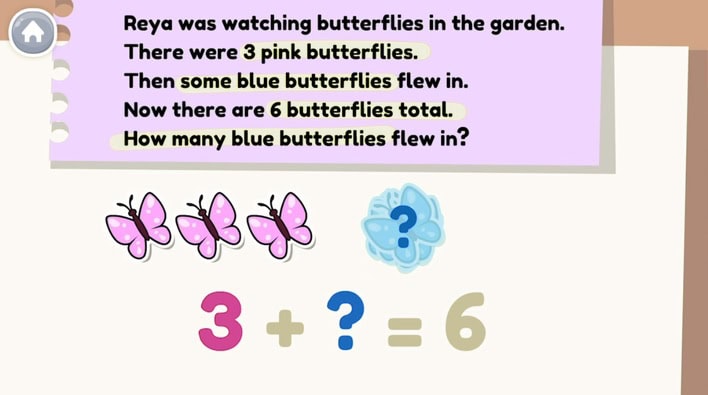
The content covers early math (counting, number sense, addition, subtraction) along with reading, social-emotional learning, and open-ended creative activities. Kids pick a character guide (Kodi the bear tends to be the family favorite here) and move through a map of lessons and games. Content was built with early childhood learning specialists, and it shows in the pacing.
Best for: preschool and early elementary (roughly ages 3 to 7). Weakest for: kids past second grade who are ready for faster, denser arithmetic practice.
2. MathHero (ages 5 to 10)
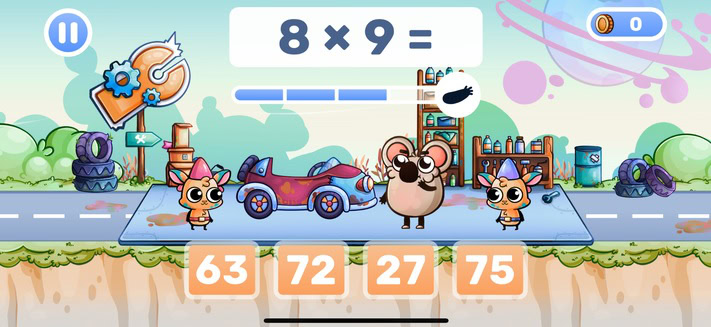
MathHero is a different proposition: a real story-driven adventure game, with characters, world-building, and gear to earn, where the mechanic for progressing (building, unlocking, rescuing animals, battling monsters) is solving math. It is not drill with a cartoon layer on top. Mental math is how you actually play.
Topics cover addition and subtraction (up to 10, 20, 100, 1000), the times tables, and division. In US terms, that’s roughly kindergarten through fourth grade: the core years for mental arithmetic fluency.
The free version includes the entire game. Nothing is locked, no ads. The single limitation is pace: five levels per day, which runs about 10 to 15 minutes. That happens to line up with what short-session practice at this age tends to look like in practice (small, consistent beats long and occasional), so for many families the free tier is enough on its own. A subscription removes the daily cap for kids who want to play longer, with a free trial if you want to test it first.
Two things parents mention a lot in reviews. First, children who previously refused math practice start asking to play, sometimes within a day or two. Second, the customization goes deeper than most: you can toggle individual times tables (just the ×7 and ×9 your child keeps forgetting), choose typed answers vs. multiple choice, and tune monster speed. Families with siblings at different levels tend to stay with it longer for exactly that reason, each child has their own profile and settings.
Best for: 5 to 10 year olds who need to build arithmetic fluency and who resist traditional practice. Weakest for: children under 5 who are still learning number recognition. MathHero starts at first addition facts; counting from zero is not what it teaches.
3. Prodigy Math (ages 6 to 14)
Prodigy is a fantasy role-playing game where kids battle wizards and the attacks are powered by solving math problems. It is curriculum-aligned (grades 1 to 8) and used in a lot of US classrooms, so there’s a decent chance your child already knows it from school.
The free tier gives full access to the educational content. Premium Membership (verify current pricing on their site, it changes) unlocks cosmetic items, pets, and areas, and candidly that’s where parents feel pressure. The learning itself works fine on the free tier. Just know going in that there will be conversations about why Alex’s wizard has the cool pet.
Best for: 2nd through 6th graders who like fantasy games. Weakest for: parents who prefer apps with no premium nudges whatsoever.
4. Photomath (ages 10 and up)
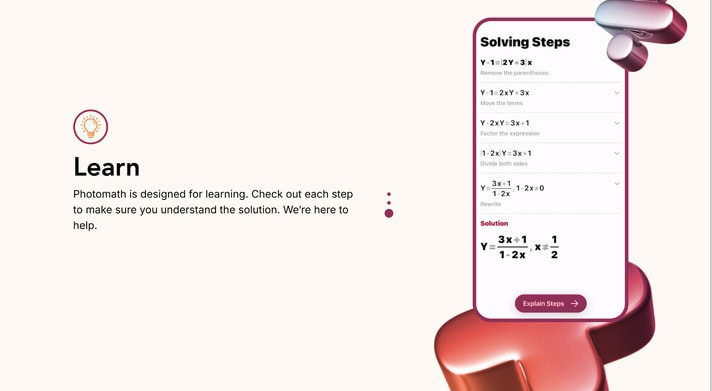
Not for little kids, but worth a slot for anyone with an older sibling in the house. Point the phone camera at a math problem, printed or handwritten, and Photomath walks through the steps. Basic step-by-step solutions are free. The animated detailed explanations sit behind Photomath Plus (check the current price in the app or on photomath.com, since they update it).
A rule we use at home: try it twice yourself, then scan to check. Used that way, it is a tutor on standby. Used the wrong way, it is a very fast cheating tool. The difference is entirely in the household rules.
Best for: middle school and up, and for parents who have forgotten how long division works. Weakest for: elementary-age kids. The step explanations assume a reader who already knows the vocabulary.
5. Todo Math (ages 3 to 8)
A quietly good early-years app. Clean design, no soundtrack that will drive you out of the room, and a daily mission structure that gives small kids a satisfying “I did my thing today” moment. Content covers counting, basic operations, time, and money.
The free tier includes a limited daily portion. The Todo Math Family subscription unlocks the full library (pricing on their site). For a preschooler doing 10 minutes a day, the free portion often lasts longer than you’d expect.
Best for: preschool and kindergarten. Weakest for: anything past second grade.
6. Math Kids by RV AppStudios (ages 3 to 7)
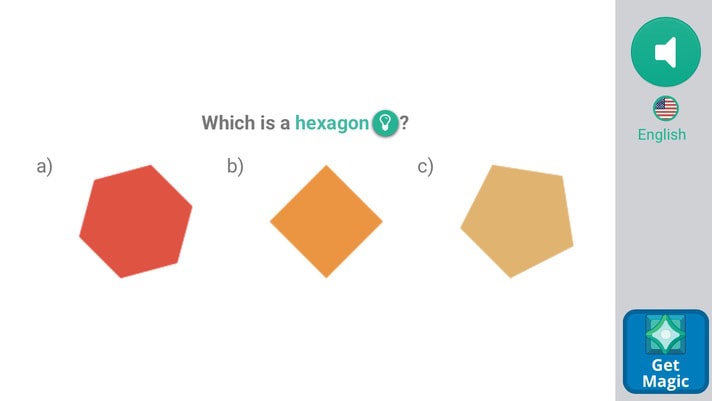
Fully free, no in-app purchases, and the ads are confined to menu frames rather than appearing mid-game. A rotating set of mini-games covering counting, matching, addition, subtraction, and simple comparisons. It is not deep, but for a four year old on a car ride, it does the job without a parent needing to be in the loop.
Best for: toddlers and preschoolers. Weakest for: anything beyond the basics.
Picking one, by situation
Preschooler, fully free, no premium conversations: Khan Academy Kids, or Math Kids as a lighter option.
Elementary child who already resists math practice: MathHero, specifically for the “asks to play” effect families consistently report. If this sounds like your house,this piece on how to make math fun is worth a read alongside whatever app you try, since the dynamic matters more than the tool.
Elementary child who likes RPGs, and the school already uses Prodigy: Prodigy Math.
Mixed-age siblings sharing one tablet: MathHero’s per-profile settings handle this well, or Khan Academy Kids plus Photomath for the oldest.
Homework help for a middle schooler: Photomath, with a clear household rule about when it comes out.
Supplementing school curriculum, grades 2 to 4: MathHero for fluency, Khan Academy Kids for breadth, used in short rotating sessions.
A caveat worth stating
None of these teach a child what the number three means. If your child has not yet encountered numbers at all, physical materials (counters, number cards, blocks, printed worksheets) remain the better place to start. Apps become genuinely useful once a child can recognize digits and understands small quantities.
One last thing on daily use
The common thread in every household where math practice actually stuck wasn’t the app, it was the rhythm: short, every day, same time. Ten to fifteen minutes after breakfast, or before screen time in the evening. Any of the apps above can carry that habit. The one that works for you is the one your child reaches for on day eight, not day one.
Prices and free-tier terms mentioned above were current when this was written; app pricing changes often, so confirm in the store listing or on the app’s website before subscribing.