Welcome to ChildFun…where Play and Learning go Hand in Hand
...where play and
learning go hand in hand!
Home » Articles » Your First Dirt Bike Gear Guide: What Every Piece Does (and Why You Need It)
Your First Dirt Bike Gear Guide: What Every Piece Does (and Why You Need It)
So you’ve caught the motocross bug. Maybe you’ve been watching pros launch off jumps on YouTube, or maybe a friend let you try their dirt bike and now you can’t stop thinking about it. Either way, before you twist that throttle, there’s one thing every rider, beginner or pro, has to figure out first: the gear.
Dirt bike gear isn’t just about looking cool (though that’s a nice bonus). Every piece has a real job, and skipping any of it is a fast way to turn a fun ride into a trip to the emergency room. Here’s a breakdown of what you actually need, what each piece does, and how to make smart choices when you’re starting out.
If you want a place to start, Strictly Wild a motocross apparel wholesale website makes custom-designed motocross apparel for kids, teens, and adults, including matching family sets if your siblings or parents ride too, and bamboo-fabric options that are softer and more breathable than typical synthetic jerseys. They ship worldwide and offer 30-day returns plus Corso shipping protection, which is helpful if you’re ordering gear online for the first time and want to make sure the fit is right.
1. The Helmet – Non-Negotiable
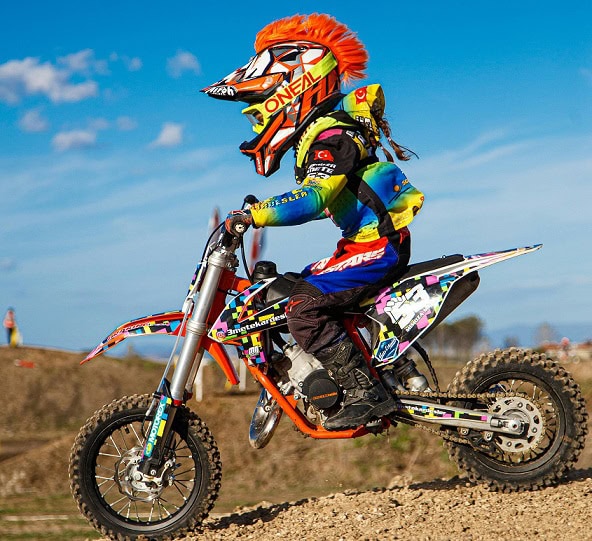
If you only buy one thing, buy a great helmet. A motocross helmet looks different from a regular bike or street helmet — it has a long chin bar (called a “chin guard”) and a peak/visor on top to block sun and roost (that’s the dirt and rocks kicked up by other riders).
What to look for:
A DOT or ECE certification sticker: that means it’s actually been safety tested
A snug fit. It shouldn’t wobble when you shake your head, but it shouldn’t squeeze your forehead either
Good ventilation, because riding gets HOT
Pro tip: never buy a used helmet. If a helmet has been in even one crash, the foam inside is compressed and won’t protect you the same way again – even if it looks fine on the outside.
2. Goggles – Your Eyes Will Thank You
Dirt, mud, bugs, branches, sun glare, other riders’ roost, all of it is heading straight for your eyes the second you start riding. Goggles solve that.
Look for goggles that fit your helmet (try them on together if you can), have a foam layer that’s comfortable against your face, and ideally come with tear-offs or a roll-off system for muddy days. Tear-offs are thin clear films you stack on the lens and rip off when they get covered in mud, so you can see again instantly.
3. Jersey and Pants – More Than Just a Uniform
Motocross jerseys and pants aren’t just a costume. They’re built tough to handle crashes and slides, but lightweight and stretchy so you can move freely on the bike. Jerseys are loose for airflow. Pants have reinforced knees and grippy panels so your legs stick to the bike.
This is also the part of your gear where you get to show some personality: designs, colors, custom graphics. A good kit makes you feel like a rider.
4. Boots – Underrated, Super Important
Ankles and shins take a beating in motocross. Bikes are heavy, the pegs are metal, and your feet are inches from a spinning rear tire. Regular sneakers or hiking boots will not cut it.
Motocross boots have:
A stiff outer shell that protects your shin and ankle from impacts
Reinforced toe boxes (in case the bike falls on your foot – it happens)
A flat, grippy sole designed to slide along the ground when you stick your leg out in turns
They feel weird and stiff at first. That’s normal. They break in.
5. Gloves – The Piece Everyone Forgets
Gloves protect your hands from blisters (which you WILL get), branches, falls, and the vibration of the handlebars. They also help you grip better when your hands get sweaty.
Look for thin, flexible gloves so you can still feel the controls. Bulky winter-style gloves make it harder to use the clutch and brake.
6. Body Armor and Knee Guards – The Smart Add-Ons
Once you have the basics, the next layer is impact protection:
Chest protector / roost guard: shields your chest, back, and shoulders from rocks and falls
Knee guards or knee braces: knees are one of the most commonly injured body parts in motocross, so this matters
Neck brace (optional): advanced riders going faster often add one to reduce neck injuries on hard crashes
You don’t need every piece on day one, but as you ride more and go faster, more armor is a smart move.