Welcome to ChildFun…where Play and Learning go Hand in Hand
...where play and
learning go hand in hand!
Home » Articles » Simple Art Activities to Get Kids Off Screens
Simple Art Activities to Get Kids Off Screens
If you have ever handed your child a tablet just to get twenty minutes of peace, you are not alone. Screens have become the default babysitter in most households, and it is easy to see why. They are instant, mess-free, and kids love them. But most parents also feel that familiar pang of guilt when an hour turns into two, and two turns into an entire afternoon.
Getting kids away from screens does not require elaborate plans or a degree in art education. Some of the best creative activities are the simplest ones, and they work just as well at the kitchen table as they do in a classroom. The trick is making art feel easy and fun rather than turning it into another structured lesson.
Here are some practical ways to bring more hands-on creativity into your child’s day.
Watercolour Painting Without the Mess
Watercolour is one of the most forgiving art mediums for kids, and it is far less messy than acrylics or finger paints. A small set of watercolours, a cup of water, and some paper are all you need to keep a child happily painting for a solid stretch of time.
For younger children, try a colour mixing game. Give them three primary colours and ask them to discover how many new colours they can make. It sounds simple, but watching yellow and blue turn into green is genuinely magical for a four-year-old. Older kids can try painting things they see around the house or outside the window, which doubles as an observation exercise.
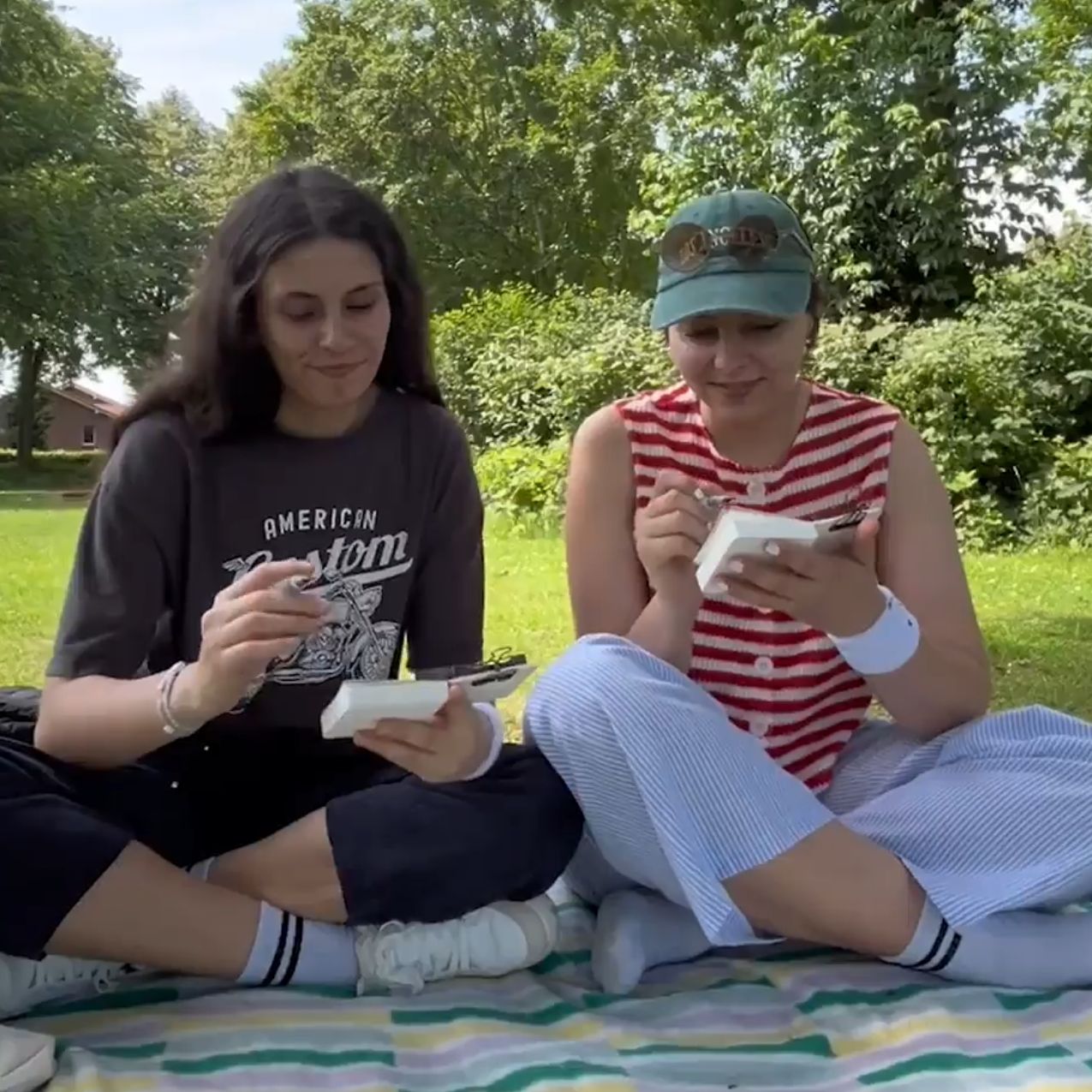
Portable watercolour kits have become a popular option for families who want even less friction. Compact sets that include a built-in palette, a water brush, and a small sketchpad, like the ones available at https://tobioskits.com/, have almost no setup or cleanup involved. You can toss one in your bag for restaurant waits, road trips, or afternoons at the park, and kids can start painting in seconds rather than spending ten minutes getting everything ready.
Nature Journaling for Curious Kids
If your child is the type who picks up every rock, leaf, and stick on a walk, nature journaling is a good fit.
Bring a notebook outside and draw, label, or write about whatever you find.
It does not need to look polished. A wobbly drawing of a ladybird with an arrow pointing to it that says “red with spots” is exactly the kind of entry that makes nature journaling work for kids. The goal is not artistic skill. It is about getting children to slow down, look closely, and pay attention to what is around them.
You can start with a simple prompt: “draw three things you see on our walk today” or “find something with more than one colour and sketch it.” For kids who are not confident drawers yet, they can press leaves into the pages, tape in flower petals, or just write descriptions.
Nature journaling also overlaps naturally with science and literacy. Children pick up vocabulary, practise observation, and learn about the natural world without realising they are doing anything that resembles schoolwork.
Kitchen Table Drawing Games
You do not need art supplies to make drawing fun. Some of the best creative activities for kids use nothing more than plain paper and whatever pens or pencils are lying around the house.
One favourite is the “finish the doodle” game. Draw a random squiggle, shape, or line on a piece of paper and hand it to your child. Their job is to turn it into something. A wavy line becomes a snake. A circle becomes a pizza. A triangle becomes a mountain with a tiny climber on top. This works well for kids who say they do not know what to draw, because it gives them a starting point without telling them what to make.
Collaborative drawing is another one worth trying. Fold a piece of paper into three sections. One person draws the head of a character in the top section, folds it over so the next person cannot see it, and passes it along. The second person draws the body, folds it over, and the third draws the legs. When you unfold the paper, the result is always ridiculous and always gets a laugh.
These games work well across age gaps too. A five-year-old and a ten-year-old can both enjoy them, which is not something you can say about most activities.
Printmaking With Everyday Objects
You do not need a printing press to introduce kids to printmaking. Some of the best prints come from things already in your kitchen. Cut an apple in half, dip it in paint, and press it onto paper. You have just made a stamp.
Potato stamps are another classic. Carve a simple shape into half a potato and let kids print patterns, wrapping paper, or greeting cards. Bubble wrap taped to a piece of cardboard makes a good texture print. Even the bottom of a celery bunch creates a rose-shaped pattern when dipped in paint.
This kind of activity gets kids thinking about texture, pattern, and repetition in a way that feels like play. It also produces results that look impressive quickly, which matters for younger children who get frustrated when drawing does not come out the way they imagined.
For daycare providers and teachers, printmaking stations are straightforward to set up. Lay down some newspaper, put out a few plates of washable paint, and let kids experiment. Cleanup is easier than you might expect.
Why Hands-On Art Matters
Creative play is not just something nice to fill an afternoon. Studies on early childhood development consistently show that hands-on art activities build fine motor skills and spatial reasoning, and that working through a drawing that is not going well teaches children something a screen simply cannot. When a child figures out how to fix a painting they are unhappy with, they are practising something genuinely useful.
A tablet can teach a child facts and letters. It cannot teach them what it feels like to mix colours with their own hands.
That does not mean screens are the enemy. Most families need them sometimes. But having a few easy art activities available means you always have something to reach for when you want to switch things up.
Getting Started Is the Easy Part
The biggest barrier to creative play at home is the belief that it needs to be complicated. A piece of paper and a few crayons can keep a child busy longer than most apps. A small travel watercolour set can salvage a boring car journey.
Pick one activity from this list and try it this week. You do not need to plan it in advance or buy anything special. Put some materials in front of your child and see what happens. You might be surprised how quickly they put the tablet down when there is something better to do with their hands.