Welcome to ChildFun…where Play and Learning go Hand in Hand
...where play and
learning go hand in hand!
Home » Articles » Art in the Corridor: How to Transform Your Hallway with Wall Art
Art in the Corridor: How to Transform Your Hallway with Wall Art
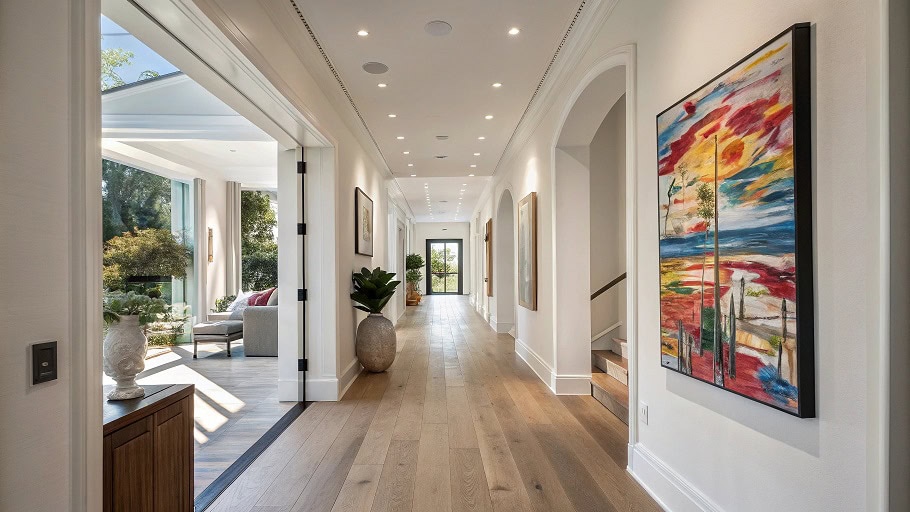
The corridor is often underestimated, yet it is one of the most dynamic spaces in a home. It connects rooms, guides movement, and sets the rhythm of how people experience the interior. When left bare, a hallway feels empty and transitional. When thoughtfully designed, it becomes a visual journey that adds depth and personality to the entire home.
Because corridors are spaces we pass through rather than stay in, they offer a unique opportunity for art to shape atmosphere through movement. Every step creates a new angle, a new perspective, and a shifting relationship between the viewer and the artwork. This makes wall art especially powerful in hallways, where a well-planned composition can transform a simple passage into an engaging gallery-like experience.
Using Art to Give the Corridor Purpose
A corridor is not just a link between rooms. It is a space that can express style, emotion, and rhythm. Artwork here has the ability to break monotony, guide the eye forward, and give the space its own identity rather than leaving it as a forgotten strip of wall.
In busy homes, corridors are passed dozens of times a day. The art you place here becomes part of daily life. It can bring calm, energy, or inspiration depending on how it is curated. For this reason, hallways deserve just as much attention as living rooms or bedrooms.
Linear Arrangements for Long and Narrow Hallways
If your corridor is long and narrow, a simple linear arrangement is often the most effective solution. Hanging artworks in a straight, evenly spaced line creates a sense of direction and visual flow. This technique visually lengthens the corridor and adds a feeling of depth, similar to walking through a modern art gallery.
The eye naturally follows repetition. When paintings are aligned at the same height, they create a rhythm that pulls you forward. This makes the hallway feel more expansive and less confined. The key is consistency: equal spacing, consistent frame size, and a shared visual language across all pieces.
A linear layout also works well when the walls are limited in width, because it avoids clutter while still providing a strong decorative impact.
Embracing Irregular Corridor Shapes
Not all corridors are straight or symmetrical. Many homes have hallways that turn, widen, narrow, or include architectural quirks. These irregular spaces offer even greater creative freedom.
In such cases, a more dynamic gallery wall can be highly effective. Instead of forcing symmetry, you can build a composition around an imaginary central axis, arranging artworks on both sides in a way that feels balanced but not rigid. This approach introduces movement and visual interest, making the corridor feel more expressive and alive.
When done correctly, the collection of artworks reads as a single large composition rather than scattered individual pieces. The corridor becomes an immersive experience instead of a simple passageway.
Creating Harmony Through Color and Contrast
Color plays a vital role in corridor design. Because hallways often have limited natural light, artwork with strong color presence can bring warmth and vitality into the space. Carefully chosen palettes can also help unify different rooms that the corridor connects.
Using works that share a dominant color or tonal family helps create coherence, even if the individual styles vary. Bold, expressive hues can energize a narrow corridor and make it feel more inviting rather than compressed. If you want to see how vibrant art can transform transitional spaces, a curated collection of expressive works can be found at https://tryartwork.com/colorful-paintings, where color is used intentionally to create visual harmony and impact.
By controlling color relationships, the artwork becomes the thread that ties the entire corridor together.
Rhythm and Visual Movement
A corridor is experienced in motion. Unlike a living room where people sit and look, a hallway is seen while walking. This means the spacing and arrangement of art should encourage a sense of flow.
Alternating sizes, shifting compositions, and carefully planned spacing can create a visual rhythm that mirrors the movement of people passing through. Each step reveals a slightly different relationship between the pieces, turning a simple walk down the hallway into a layered visual experience.
This rhythm keeps the space from feeling static and makes the corridor feel alive.
Turning the Corridor into a Living Gallery
When art is thoughtfully arranged in a corridor, the space takes on new importance. It becomes more than a route between rooms. It becomes a place of expression, discovery, and subtle inspiration.
Each time someone walks through, the artworks offer a renewed interaction. The corridor gains energy from its decorated walls, and the home feels more cohesive as a result.
A well-designed hallway gallery proves that even the most overlooked spaces can become some of the most memorable parts of a home.